
Interior Design Styles Dubai Owners Ask For, and How to Choose Yours
Contemporary, modern luxury, warm minimalism, organic modern, modern Arabic and classic interiors explained for Dubai villas and apartments.
Projects from AED 150,000
Guide: interior styles
Most owners arrive with a folder of saved images rather than the name of a style, and that is a good place to begin. The pictures usually share a few things: a palette, a level of ornament, a leaning towards curves or straight lines, and a mood somewhere between calm and dramatic. Putting a name to the style simply gives everyone the same shorthand.
Below are the styles we are asked about most often in Dubai, what defines each one, how it suits the climate and the way families here use their homes, and where our own work shows it. Where none of our project images genuinely represents a style, we describe it in words rather than stretch an image to fit.
Styles in this guide
- Contemporary
- Modern luxury and glamour
- Warm minimalism and quiet luxury
- Organic modern
- Transitional
- Modern Arabic
- Classic and neoclassical
- Mixing styles across a villa
How to use a style name
A style is a set of choices that tend to travel together: materials, colours, shapes, and how much decoration is allowed and where. It is useful because it keeps hundreds of later decisions consistent. It becomes a problem when it is treated as a rulebook, so we use it as a direction and let the brief, the architecture and your own furniture shape the details.
In practice, many homes we design sit between two styles, such as contemporary lines with a warm minimal palette, or a modern interior with Arabic geometry in the majlis. That is perfectly normal, and the result often feels more personal because of it.
Contemporary
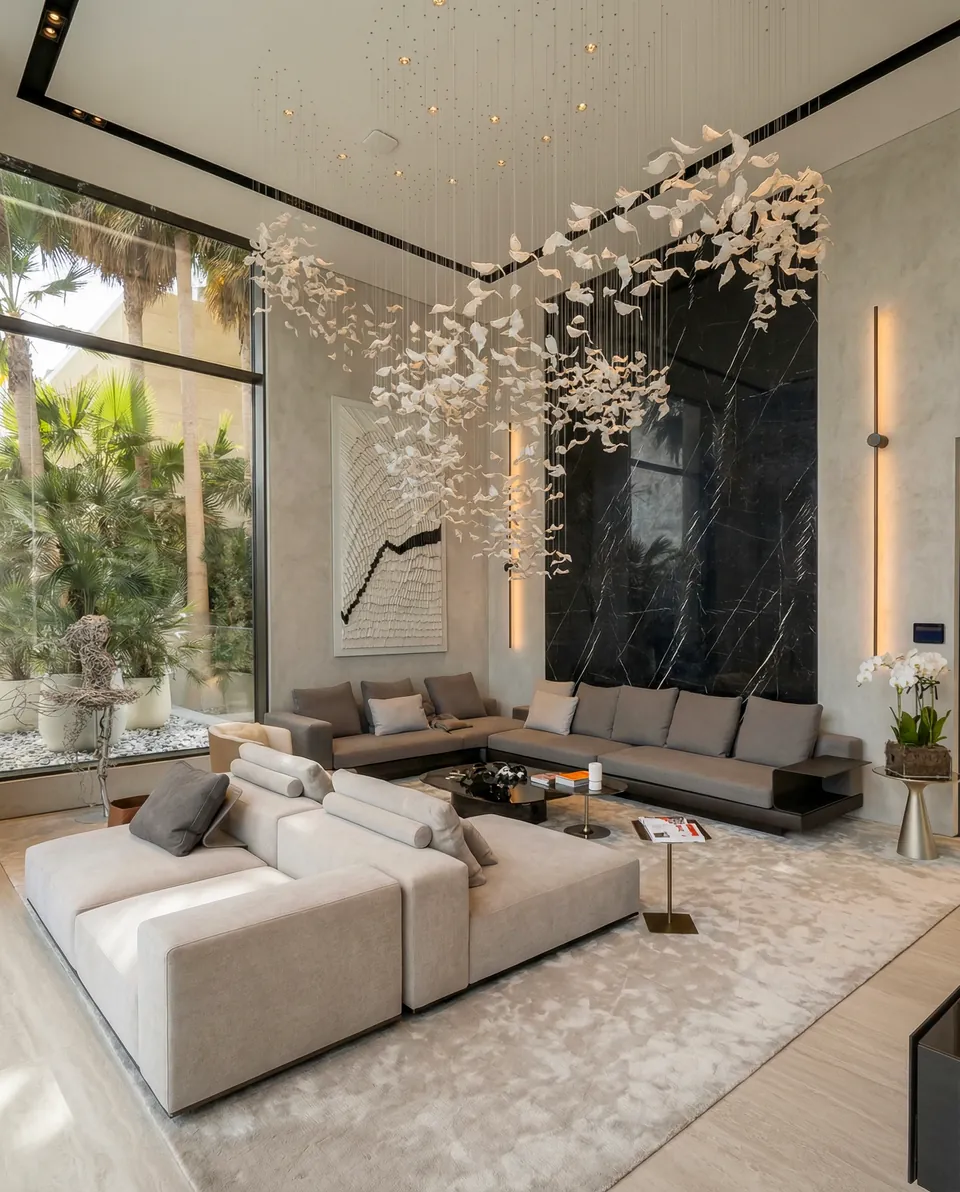
Contemporary design is the look of the present: clean architectural lines, large uninterrupted surfaces, low and generous furniture, and one or two strong features such as a stone wall or a sculptural light. Colour is usually restrained, with contrast coming from materials rather than paint.
It suits the big windows and open plans of newer Dubai villas and towers. The risk is a room that feels cold or echoes, so we add texture through rugs, upholstery and timber, and layer the lighting so the space keeps its character after dark. The living room pictured, from our Palm Jumeirah Villa, shows the approach: low modular seating, a dark veined stone wall and a suspended light installation, with the garden framed by full-height glass.
Modern luxury and glamour
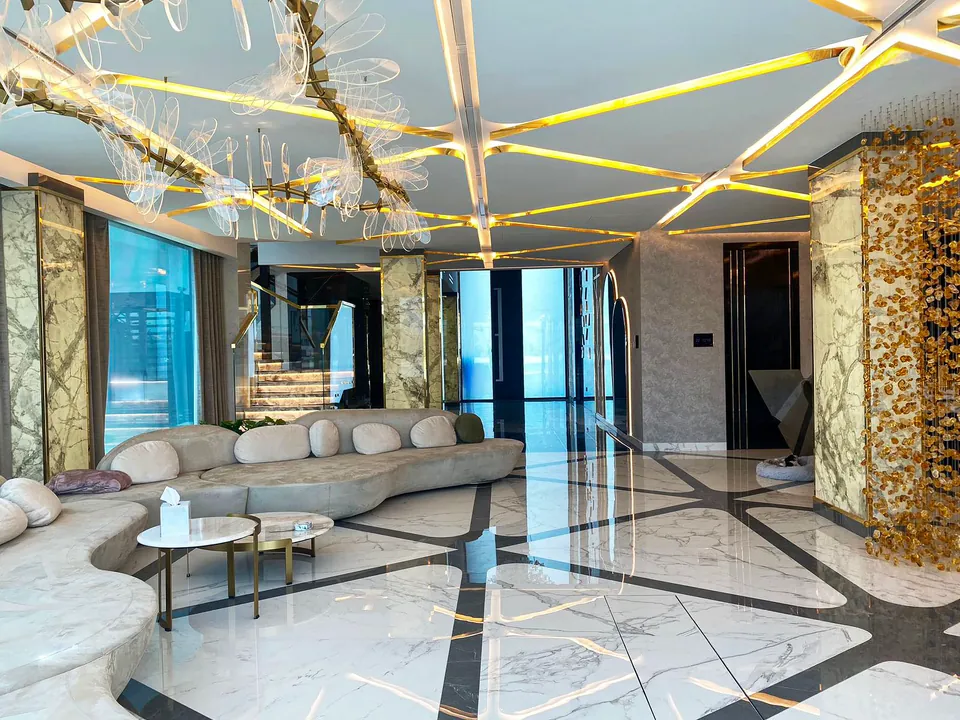
This is the boldest end of the range and a look many people associate with Dubai: polished marble, high-gloss surfaces, gold or brass detailing, statement chandeliers and dramatic ceilings. Handled well it feels generous and celebratory. Without restraint it tips into busy.
The skill lies in deciding where the drama goes. A formal reception room, or a dining room for large family gatherings, can carry an illuminated gold ceiling and an inlaid marble floor, while the family room and bedrooms step back into calmer finishes. Gloss also shows dust and fingerprints and reflects every light source, so light positions need careful planning.
At MK Villa on Palm Jumeirah, the client wanted a home that felt grand yet comfortable, with glossy finishes, subtle colour combinations and a distinct golden touch. The formal reception shown here is where that brief is expressed most fully.
Warm minimalism and quiet luxury
Warm minimalism keeps the discipline of minimal design, with few objects, clear surfaces and hidden storage, but swaps cold whites and greys for cream, sand, taupe and timber. Quiet luxury is a close relative: the richness lies in the quality of the materials and the precision of the details, not in anything that announces itself.
Both depend on what you do not see. Storage has to be generous and concealed, cables and air conditioning grilles are hidden, and joints between materials are drawn with care, because in a room with little decoration every line is noticed. The palette also sits well with strong sun, where soft pale tones feel restful and fade less visibly than saturated colour.
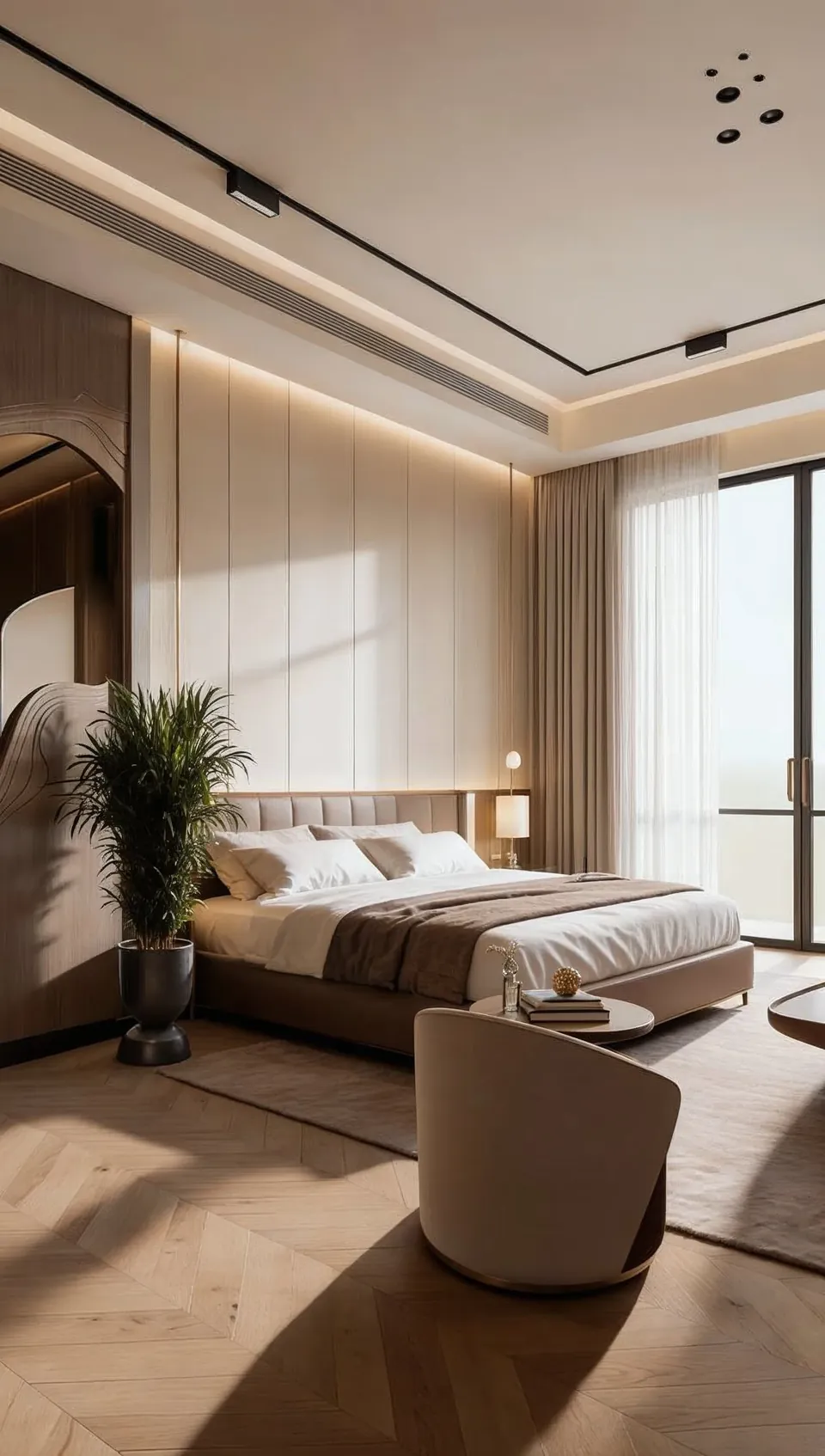
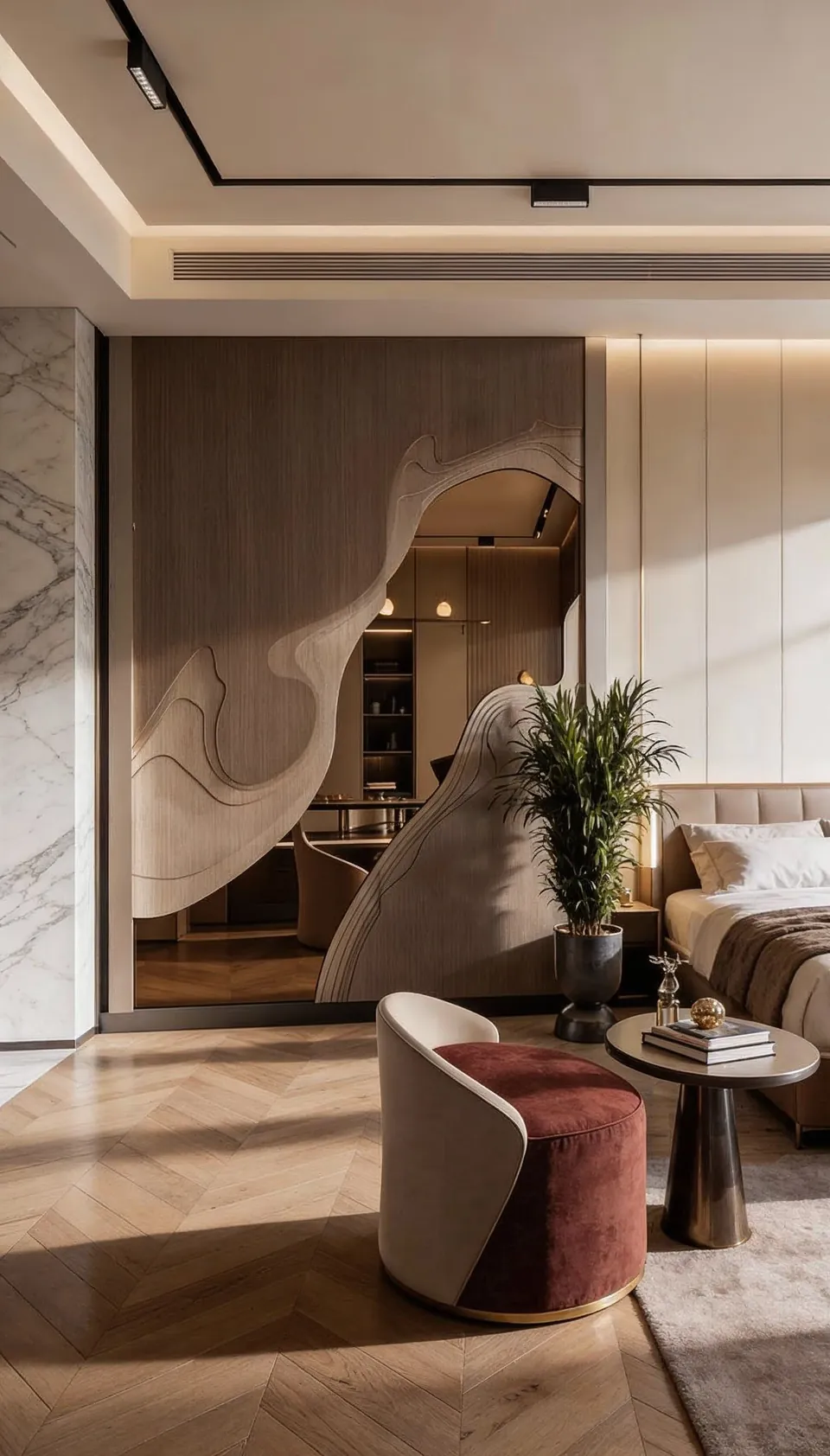
The brief for Emirates Hills Villa asked for no colourful tones and minimal visual elements, and the bedroom shown keeps to it with vertical panelling, concealed cove lighting, a herringbone timber floor and a restrained palette. At Imperial Avenue Apartment in Downtown Dubai, the design was built around the idea of quiet luxury, using warm neutrals, bouclé and softly lit arches.
Organic modern
Organic modern brings nature into a modern plan: stone and timber in their less polished forms, lime plaster and textured walls, rounded furniture, handmade ceramics and living plants, sometimes an entire tree. The palette follows the materials, so it leans towards stone, sand, olive and clay.
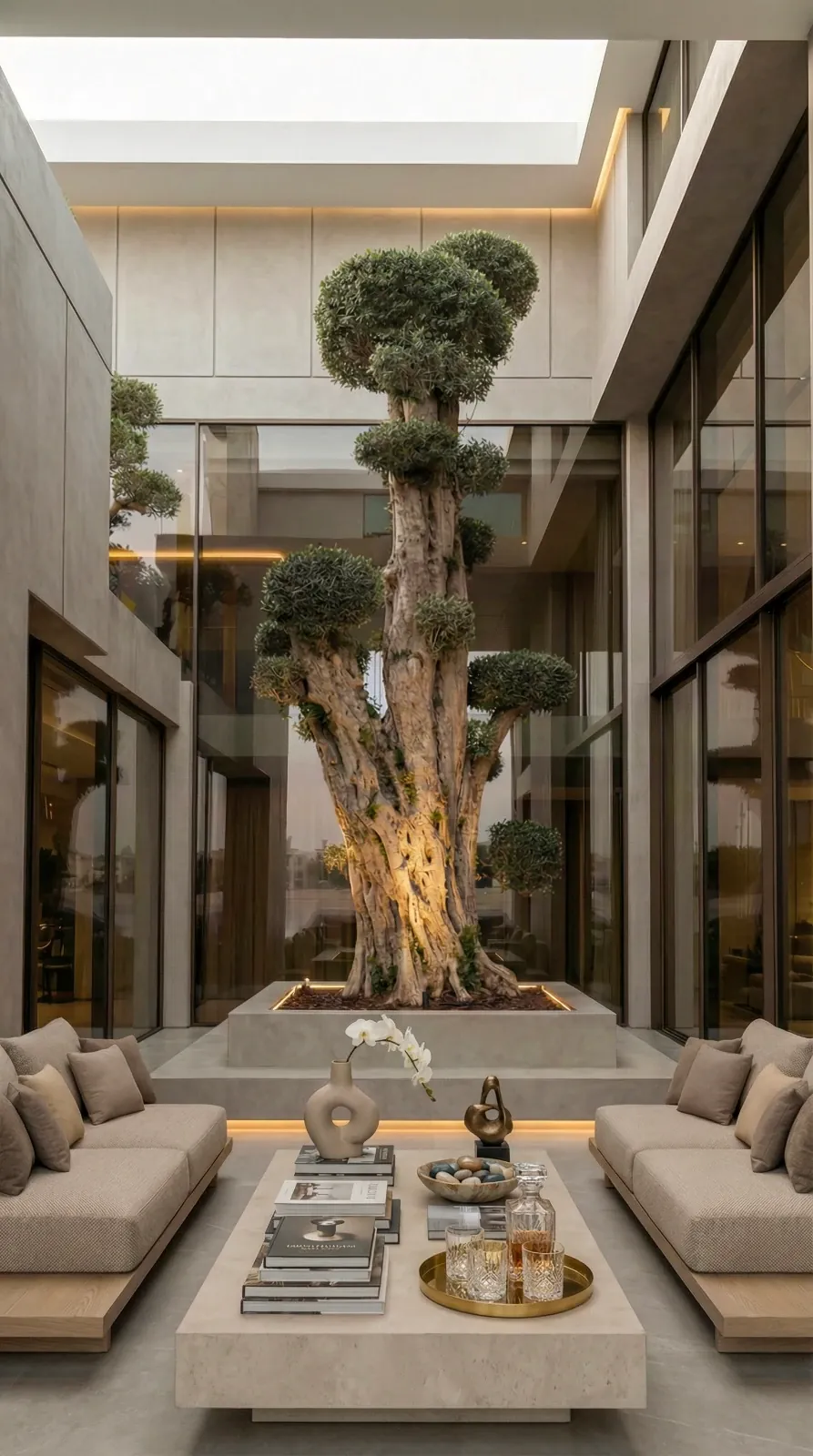
In Dubai the style has a clear logic. It softens the hard edges of new buildings, echoes the desert landscape outside and suits courtyards and shaded outdoor rooms. Plants need planning for light, irrigation and drainage, and a large indoor tree calls for structural and waterproofing thought, not just a bigger pot. The courtyard-style living space pictured shows the style at its most striking, with a mature olive tree under a skylight at the centre of the seating. Natural materials in this style are often honed or oiled rather than polished, which hides wear well but asks for occasional resealing or re-oiling.
Transitional: classic proportions, modern detail
Transitional interiors sit between classic and contemporary. They keep what people love in traditional rooms, such as symmetry, panelled walls, framed floors and a central chandelier, and pair it with simpler profiles, fewer mouldings and modern lighting.
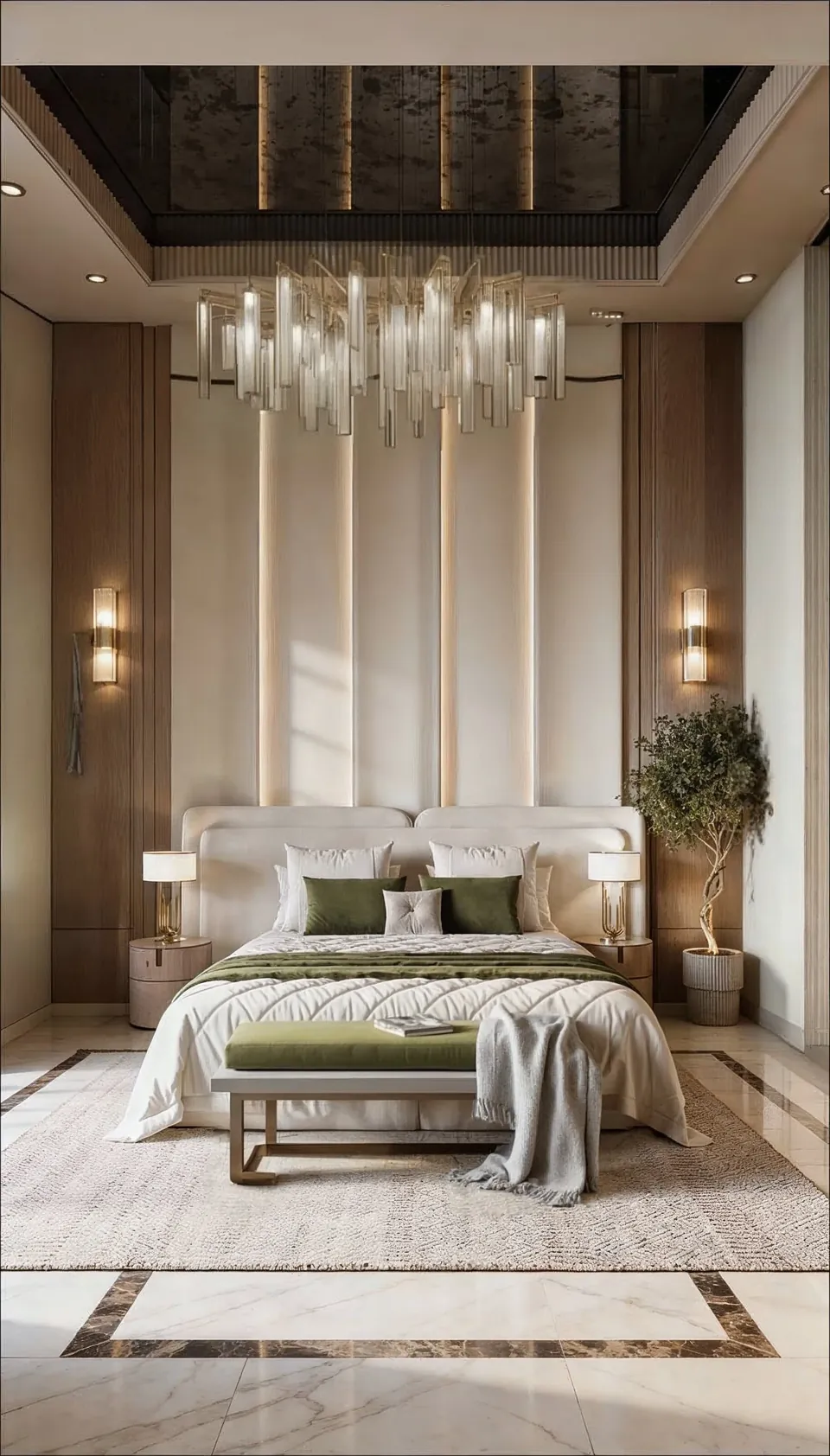
It is a comfortable choice for families who find pure minimalism too spare and full classicism too formal, and it adapts well to master bedrooms and dining rooms. The bedroom pictured borrows from both sides: a symmetrical arrangement with matching bedside lights, tall upholstered wall panels and a marble floor framed by a darker border, all drawn with clean contemporary lines.
Modern Arabic
Modern Arabic design draws on the architecture and craft of the region: geometric patterns, arches, screens that filter light and give privacy, carved timber, brass lanterns and generous low seating. The modern version uses these elements selectively, often at a larger scale and in a calmer palette, so a single geometric screen or a run of arches carries the reference rather than every surface.
It is requested most often for the majlis and formal reception rooms, where hosting guests is the purpose of the space and a sense of place matters. Patterned screens can also solve practical problems, shading a sunny window or dividing a formal area from a family one while letting air and light pass. Our majlis interior design page covers that room in detail.
Materials matter as much as motifs. Carved or fretwork timber, brass and hand-finished plaster bring warmth, while the upholstery on low seating has to stand up to frequent use by guests. Screens inspired by the mashrabiya can be made in timber, metal or composite, and each suits a different place: timber indoors, and powder-coated metal where a screen faces sun and weather.
Classic and neoclassical
Classic interiors take their language from European traditions: symmetry, cornices and ceiling mouldings, panelled walls, columns and pilasters, marble fireplaces, rich fabrics and carved or gilded furniture. Neoclassical design is the lighter, more restrained branch, with paler colours and cleaner ornament.
In Dubai the style usually appears in the formal living and dining rooms of larger villas, and it rewards high ceilings. It relies on skilled joinery and plasterwork and on careful proportion, because mouldings that are slightly too thin or too heavy spoil the effect. Full drapes need planning for sun and dust too, with linings and good-quality tracks. A lighter touch suits most apartments, where ceilings are lower: a panelled wall, a cornice and a single chandelier give the character without crowding the room.
Mixing styles across one home
A villa rarely needs one style from the front gate to the roof terrace. A familiar pattern in Dubai homes is a more formal, decorated majlis and dining room for guests, with calmer and more relaxed family rooms and bedrooms beyond. The house still has to feel like one place, so we carry a shared thread through it: a consistent floor, a limited set of metal finishes, or a palette that changes in intensity rather than changing altogether.
Children's rooms and a teenager's den often break away completely, and that works well as long as the doors, floors and lighting stay consistent with the rest of the home. These are the threads we most often use to hold a mixed home together.
- One floor finish running through the main living areas
- A small, consistent family of metal finishes for handles, taps and lights
- Door styles and heights that repeat from room to room
- A palette that grows richer in the formal rooms and quieter in the private ones
- Lighting of the same warmth of colour throughout
Choosing a style that suits you and the climate
A few questions help narrow the choice. How formal is your household? How often do you host, and for whom? Do you like objects on display or clear surfaces? Which rooms take the afternoon sun? Glossy, pale and reflective surfaces bounce light and can add glare, while textured matt finishes feel calmer in bright rooms.
Then test it. Mood boards set the direction, and renders show the style in the real proportions of your rooms before anything is bought. Our 3D visualisation stage is usually where a choice between two styles gets settled, and our guides to the design process and to materials and finishes explain what follows. When you are ready, send your saved images through our estimate page.
Guides from the studio
Our Work
Related Projects
FAQ
Interior Design Styles for Dubai Homes: Questions Answered
Clarity brings comfort. Discover answers to what others have asked, or reach out if yours is still unanswered.
Which interior design style works best in a Dubai villa?
There is no single best style. Contemporary and warm minimal interiors suit the open plans and large windows of many newer villas, while modern luxury and classic styles suit tall, formal rooms. The right answer depends on how you live and how often you host.
Can we combine modern design with Arabic elements?
Yes, and it is one of the most natural combinations for a Dubai home. A modern base of calm finishes and clean lines lets a few Arabic references, such as a geometric screen, an arch or a brass lantern, stand out rather than compete.
What is the difference between warm minimalism and quiet luxury?
They overlap a great deal. Warm minimalism is about fewer objects and a soft, natural palette. Quiet luxury puts more weight on the quality of materials and craftsmanship, and can allow a little more furniture and texture, as long as nothing shouts.
Does a glamorous style need more maintenance?
Usually a little more. High gloss, polished marble and gold-toned metals show fingerprints, dust and marks more readily than matt and textured finishes. Choosing durable coatings and planning cleaning access at design stage keeps it manageable.
We do not know which style we like. Where do we start?
Start by collecting images of rooms you like and a few you dislike, without worrying about labels. We look for the patterns across them, name the direction, and test it on a mood board before anything else is designed.
Will the style we choose date quickly?
The details most tied to a moment, such as a trend colour or a fashionable shape, date first. A sound layout, good materials and well-planned lighting last much longer, so we put the fashion into things that are easy to change, like fabrics, accessories and paint.
Not sure which style is yours?
Share a handful of saved pictures on WhatsApp, or ring +971 58 585 6265 with the location and size of the property. Within one working day, expect an indicative estimate from us, with a proposed timeline to go with it.