
Majlis Interior Design in Dubai
Majlis interior design for Dubai villas: men's, women's and family majlis, seating layouts, acoustics, lighting, coffee service storage and guest entrances.
Projects from AED 150,000
Majlis design
In many Emirati and Arab homes in Dubai, the majlis is where hospitality happens. Guests are received, coffee is poured, news is shared and family occasions are marked there, and the room has to feel generous whether a few relatives drop by or a large gathering fills every seat. Getting it right depends less on ornament than on layout, sound, light and the quiet service that supports a good welcome.
We design majlis rooms as part of villa interiors across Dubai, from a single formal room beside the front door to a pair of men's and women's majlis, each with its own entrance and service route. We begin with how your family hosts: who visits, how often, in what numbers, and whether guests should ever cross paths with the household. The plan, the joinery and the finishes follow from those answers.
What we design in a majlis
- Men's, women's and family majlis layouts
- Perimeter, U-shaped and grouped seating plans
- Separate guest entrances, lobbies and washrooms
- Coffee, tea and incense service points
- Acoustic ceilings, wall panels and soft finishes
- Layered, dimmable lighting
- Joinery for cups, trays, flasks and cushions
- Air conditioning and fresh air planning
- Contemporary, traditional or blended treatments
Men's, women's and family majlis
Not every home needs all three. Some villas have one formal majlis used by everyone at different times; others keep the men's and women's rooms entirely apart. The arrangement shapes the entrances, corridors and service routes, so we settle it before anything else is drawn.
- Men's majlis
- Usually close to the main entrance
- Often the larger, more formal room, placed so male visitors can arrive and leave without passing through the private part of the house, usually with its own door, a guest washroom and a link to a pantry.
- Women's majlis
- More private, often nearer the family rooms
- Planned for female guests and relatives, screened from the street and the main approach, and sometimes opening towards the garden or the family living area.
- Family majlis
- The everyday room
- A relaxed room where the household sits together and close relatives are welcomed without ceremony. It takes the wear of daily life, so fabrics, flooring and storage are chosen for comfort and easy care rather than display.
Seating layouts that keep one conversation going
Seating is where a majlis works or fails. Guests need to see and hear one another, the host needs a natural place to sit, and whoever serves coffee needs a clear path to every seat without stepping over feet.
Deep, low seating is comfortable for a long evening but hard for older guests to rise from, so we often mix seat heights or add firmer seats near the door. Our space planning work tests each layout before furniture is ordered.
- Perimeter seating
- The traditional arrangement
- Continuous seating along three or four walls, with everyone facing the centre and able to see the host. It seats the most people in a given room, and small tables are spaced so every guest can set down a cup.
- U-shaped layout
- Open on one side
- Seating on three sides, with the fourth kept for the doorway, a feature wall or a screen. The room keeps the sense of a single gathering while gaining a clear focal point.
- Grouped seating
- Two or three conversation areas
- Sofas and armchairs arranged in clusters within a larger room. This suits mixed gatherings and family use better than one long line of seats, and the groups can be pulled together for a big occasion.
Hospitality and the service behind it
A good majlis feels effortless to guests because the work happens out of sight. Arabic coffee, tea, dates and water all have to reach the room quickly and quietly, and the incense burner has to be lit, carried and refilled safely. We plan a pantry or coffee station within easy reach, ideally with its own door into the majlis so service never crosses the guests' entrance, and store coffee pots, flasks and small cups where they are used rather than in a kitchen at the far end of the villa.
- A coffee station with water, power, a small sink and space to set out trays
- Drawers sized for coffee pots, flasks, cups, saucers and serving trays
- A heat-safe, ventilated place to prepare and store incense burners and coals
- Cupboards for spare cushions and floor seating used on larger occasions
Separate guest entrances
Where the family wants guests kept apart from the household, the route in matters as much as the room itself. A dedicated door from the forecourt leads into a small lobby with space to remove shoes, a guest washroom for washing hands, and then the majlis, without any view into the family rooms beyond. Our entrance and foyer design page covers how that first space sets the tone.
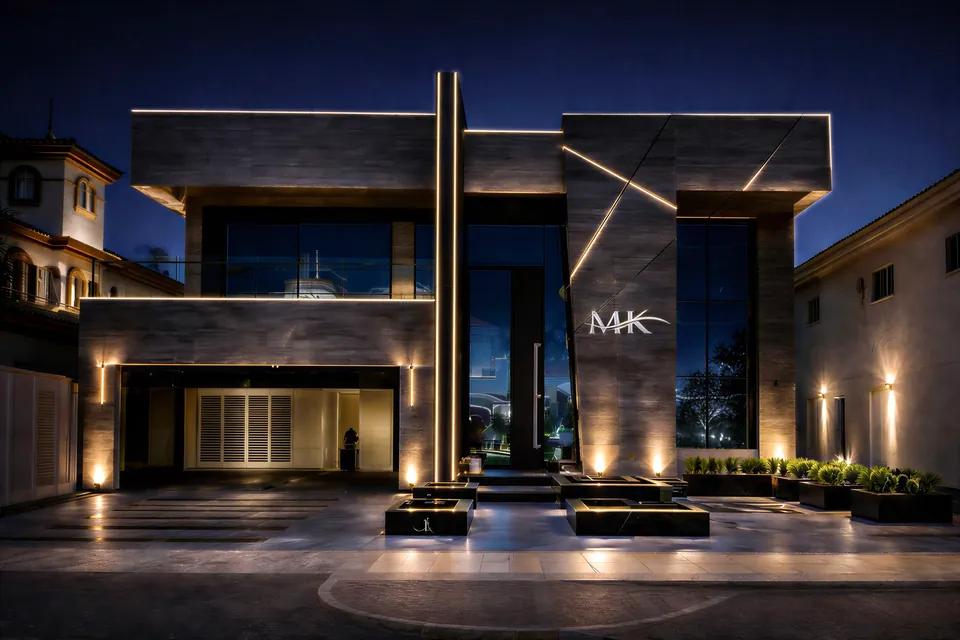
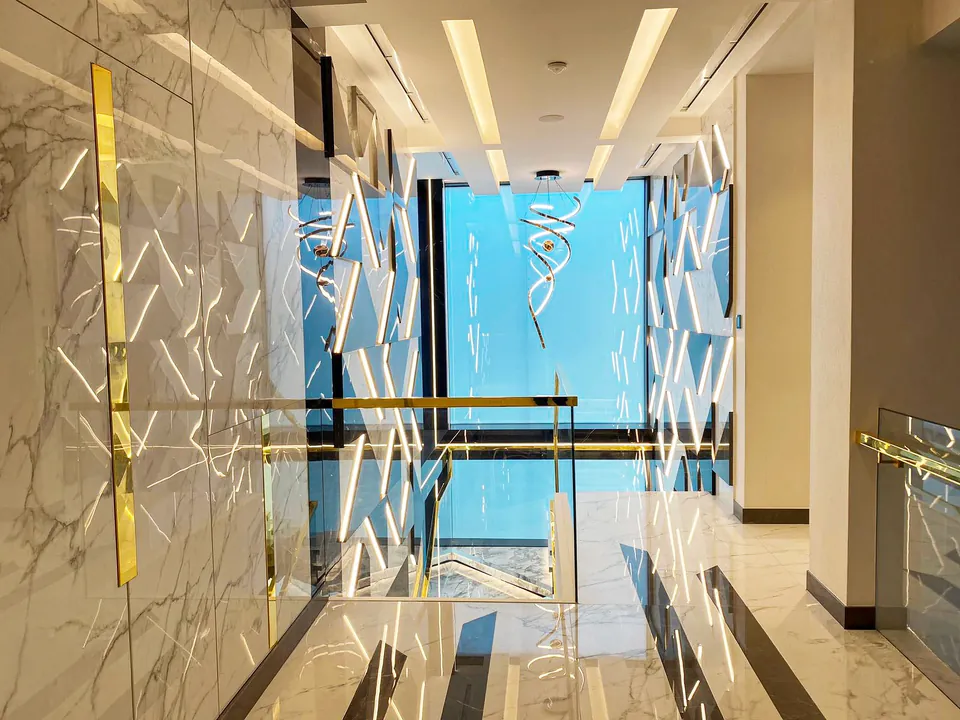
On MK Villa, a 6,350 sq ft home on Palm Jumeirah completed in 2023, the design and build scope included a grand entrance with a spacious car garage, planned to make a strong first impression on arrival. In an existing villa, adding a new external door or moving walls may need developer and authority sign-off, which we handle as described on our authority approvals page.
Acoustics in a room full of voices
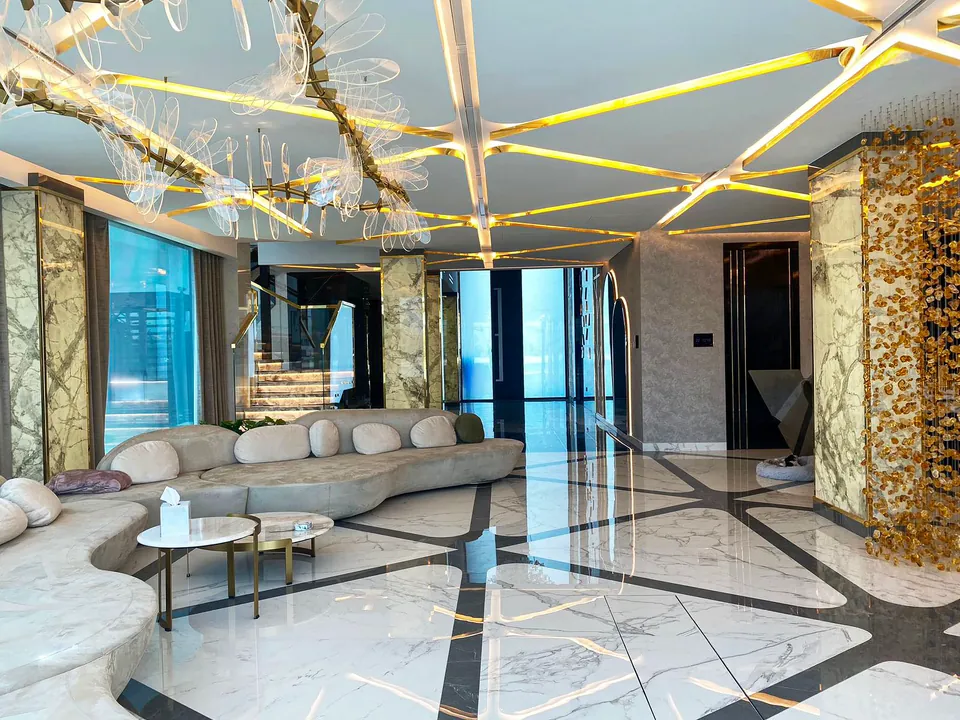
Marble floors, high ceilings, large windows and plastered walls all reflect sound. With twenty people talking at once, a hard room quickly becomes tiring, and the host ends up raising their voice to be heard. We balance hard finishes with surfaces that absorb sound, placed where they do the most good.
Privacy is the other half of acoustics. A men's majlis should not be heard from the family kitchen, and a women's majlis should not be overheard from the corridor. Insulated partitions, solid-core doors with good seals and a small lobby between rooms make a noticeable difference.
- Large rugs over stone floors, with underlay
- Upholstered or fabric-wrapped wall panels behind seating
- Timber slat panels with an absorbent backing
- Acoustic plaster or panels hidden in the ceiling
- Full-height curtains that soften large areas of glazing
Lighting for everyday visits and big occasions
A majlis is used at every hour, from morning visits to late gatherings during Ramadan and Eid, so the lighting has to change with it. We layer soft general light from coves and recessed fittings, wall lighting that shows off panelling, artwork or calligraphy, and a statement fitting that anchors the room. Warm light suits most majlis rooms; cold white light makes rich fabrics and timber look flat.
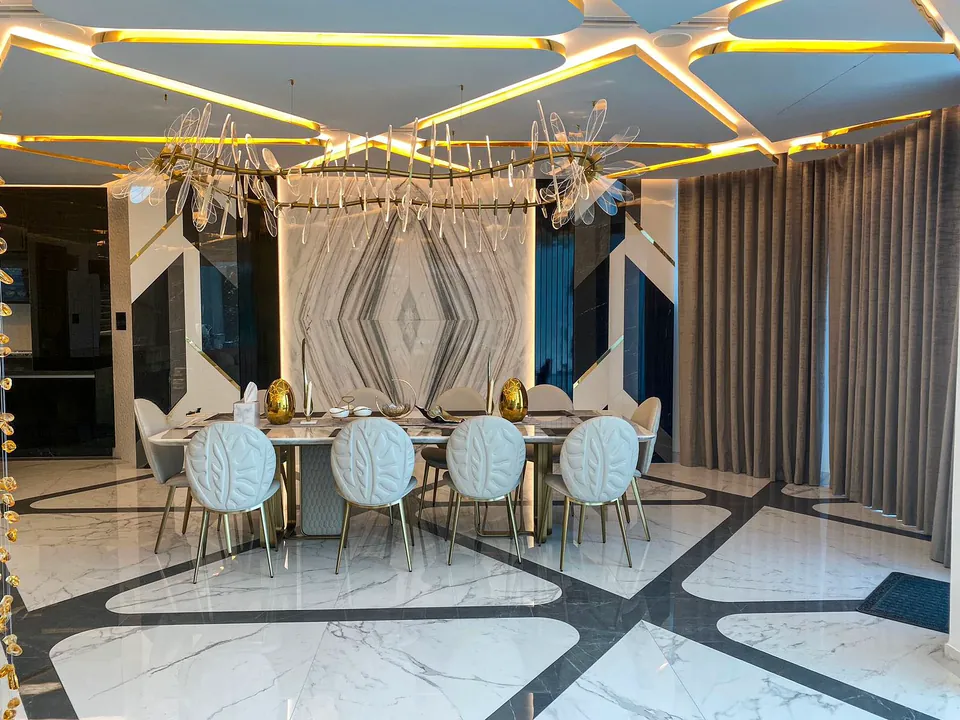
Dimming and preset scenes let the host move from a bright welcome to a relaxed evening with one button. On MK Villa, customised imported fixtures were chosen to pick out architectural features. By day, layered sheer and blackout curtains tame the strong sun without closing the room off.
Comfort in the Dubai climate
A room full of guests adds a great deal of heat, and in Dubai the air conditioning runs for most of the year. We work with the MEP engineers so cooling is sized for a full room, not an empty one, and so diffusers do not blow directly onto seated guests. Linear slot diffusers set into the ceiling are often the least visible and most comfortable choice.
Incense and oud smoke need somewhere to go, so we plan fresh air and extraction that clear the room without creating draughts. Near the entrance, harder-wearing finishes and a proper mat area catch the sand that comes in on shoes, and fabrics facing the windows are chosen to resist fading.
Contemporary, traditional or somewhere between
Most families we meet want a majlis that feels rooted in local tradition without looking like a period set. We show the options in 3D before anything is ordered, through our 3D visualisation service, so you can judge proportions, colours and finishes together. Our guide to interior design styles in Dubai explains the wider choices.
- Traditional
- Rich, layered, familiar
- Floor seating or low sofas with bolster cushions, patterned carpets, carved timber, arches, screens inspired by mashrabiya, and textiles that echo Sadu weaving. It feels generous and ceremonial, and suits a formal men's majlis especially well.
- Contemporary
- Calm and pared back
- Low, clean-lined sofas, plain stone, restrained colour and geometric screens that hint at Arabic pattern rather than copying it.
- Blended
- A mix of both
- Traditional seating arrangement and hospitality details with contemporary materials and lighting. On Palm Jumeirah Villa, where our role was interior design and space planning, the owners asked for a home that was neither old-fashioned nor overly modern, which is often exactly the balance a majlis needs.
What shapes the cost of a majlis
We do not publish prices for a single room, because two majlis of similar size can involve very different work. Projects start from AED 150,000, and within that the main cost drivers are easy to name. Share your plans through our estimate form and we will set out where the budget is likely to go.
- The size of the room and whether walls, doors or the entrance move
- Custom seating and the extent of joinery, panelling and screens
- Stone, timber and fabric grades
- Acoustic treatment in walls and ceilings
- Lighting design, fittings and control
- Changes to air conditioning, ventilation or the pantry services
Guides from the studio
Our Work
Related Projects

FAQ
Majlis Interior Design: Questions Answered
Clarity brings comfort. Discover answers to what others have asked, or reach out if yours is still unanswered.
What is the difference between a majlis and a living room?
A living room is mainly for the family. A majlis is designed around receiving guests: the seating faces inwards so everyone shares one conversation, service reaches it discreetly, and in many villas it has its own entrance and washroom so visitors never pass through the private rooms.
Do we need separate men's and women's majlis?
Only if it suits the way your family hosts. Many households use one formal majlis at different times, while others prefer two rooms with separate doors. We discuss how you entertain before recommending either.
Can you add a majlis to an existing villa?
Often, yes. A ground-floor room near the entrance can usually be converted, and a new guest door or washroom can be added. Where walls, doors or services change, we check what the developer and authority require first.
Should majlis seating be on the floor or on sofas?
Both work well. Floor seating with cushions feels traditional and flexible, while sofas are easier for older guests. Many families choose raised seating with a traditional arrangement, or keep floor cushions in storage for larger gatherings.
How do you stop a majlis from echoing?
By balancing hard finishes with absorbent ones: rugs with underlay, upholstered wall panels, acoustic ceiling treatment and full-height curtains. We place them where voices carry most, usually behind and above the seating.
Can a majlis include a place for prayer?
Yes. Some families like a quiet, clean corner or an adjoining small room for guests to pray. We consider the direction of prayer, storage for prayer mats and a washroom close by, and plan it with you rather than assuming.
Planning a majlis for your villa?
WhatsApp or call us on +971 58 585 6265 and tell us your community, the room you have in mind and how your family hosts. Within one working day we will send back an indicative estimate for your majlis, together with a proposed timeline.