


Kids' Bedroom Design in Dubai, From Nursery to Teenage Years
Kids' bedroom design in Dubai: nurseries, shared rooms and teenage bedrooms with safe furniture, smart storage and study areas that adapt as children grow.
Projects from AED 150,000
Children's bedrooms
A child's bedroom changes faster than any other room in the house. Within a few years the same space goes from a nursery built around night feeds to a playroom full of toys, then a place for homework and finally a teenager's private domain. Designing it well means getting the fixed parts right, the layout, lighting, sockets, storage and safety, and keeping everything else easy to change.
We design children's rooms within villa and apartment projects across Dubai, working with parents, and with the children themselves once they are old enough to have opinions. The aim is a room that is safe, calm enough to sleep in and ready to grow with its owner.
What we design in a child's room
- Nurseries and baby rooms
- Toddler and school age bedrooms
- Teenage bedrooms and study corners
- Shared rooms for siblings
- Wardrobes, toy and book storage
- Desks and homework areas
- Dimmable lighting and blackout
- Safety details designed in
- Layouts that adapt as children grow
From nursery to teenager
Each stage asks something different of the room. Planning with the next stage in mind avoids ripping out joinery a few years later.
- Nursery
- Calm, dim and practical
- A cot away from windows and air conditioning outlets, a changing area with everything within arm's reach, a comfortable chair for feeding and lighting that can be kept very low at night. In the early months many parents want the nursery close to the master bedroom, or a cot corner within it.
- Toddler
- Floor space and reachable storage
- Open floor to play on, low shelves and boxes children can use by themselves, and furniture with rounded edges.
- School age
- Room for hobbies and homework
- A proper desk with good light, display space for things they make and collect, and a wardrobe they can manage on their own.
- Teenager
- Privacy and a sense of ownership
- A larger bed, a work setup that suits long study sessions, charging points where they are actually needed, and finishes they have had a say in.
Safety, designed in rather than added later
Most child safety in a bedroom comes down to a few principles, and they are far easier to build in than to retrofit. These are general points, not a checklist for particular products, and we review them with you for your home and your children's ages.
Many Dubai children sleep in apartments high above the ground or in first floor villa bedrooms, so windows and balconies deserve particular attention.
- Tall and heavy furniture, such as wardrobes, bookcases and chests of drawers, fixed to the wall so it cannot tip if climbed
- Beds, desks and anything climbable kept away from windows
- Restrictors or locks on opening windows, and balcony doors that young children cannot open on their own
- Sockets positioned so cots and beds do not sit against them, with cables kept out of reach
- Cordless blinds or cord cleats, because looped cords are a hazard for young children
- Soft close drawers and doors, and rounded corners at toddler head height
- Guard rails on the top bunk and a secure ladder
Storage children can use
Children tidy up more readily when every type of thing has an obvious home they can reach. We plan low open shelves and pull-out boxes for toys, hanging rails at a height they can manage, and higher cupboards for things they should not get to alone. As children grow, the rail moves up and the toy boxes give way to shelves for books and projects.
A wardrobe with adjustable internals serves the whole of childhood, and deep drawers under the bed hold bedding, out of season clothes and spare toys. Careful planning for storage and organisation ran through our space planning for Palm Jumeirah Villa, a family home, and it matters in children's rooms more than most.
Study areas
Once homework starts, a child needs somewhere to concentrate: a desk wide enough for books and a laptop, a chair that adjusts as they grow, task light from the side opposite the writing hand, and sockets at desk height rather than on the floor behind it. Placing the desk near daylight helps, but not facing into direct sun, which in Dubai can make a screen hard to read for much of the afternoon.
Some families prefer younger children to do homework in a shared family area where a parent can help, keeping the bedroom for sleep and play. We can plan for both, with power and light ready for a bedroom desk that arrives later.
Shared rooms for siblings
Sharing a room works well when each child has a clear piece of it. We give every child their own bed zone with a reading light and a switch within reach, their own storage and, where possible, their own shelf for treasured things. Bunk beds or a raised bed over a desk free floor space for play, and a low divider or a change of colour can mark territory without closing the room in.
Sharing across different ages needs extra thought: separate lighting so an older child can read while a younger one sleeps, and a plan for how the room could be divided or reworked when one of them moves into a room of their own.
Designing a room that adapts
The most useful thing we can do is keep the fixed parts of the room neutral and well planned, and let the character come from things that are easy to change. Built-in joinery, the ceiling, light positions and flooring stay; wall colours, wallpaper, bedding, rugs and artwork move on with each stage. A theme a four year old adores rarely survives to twelve, so we usually put it into paint and textiles rather than carved joinery.
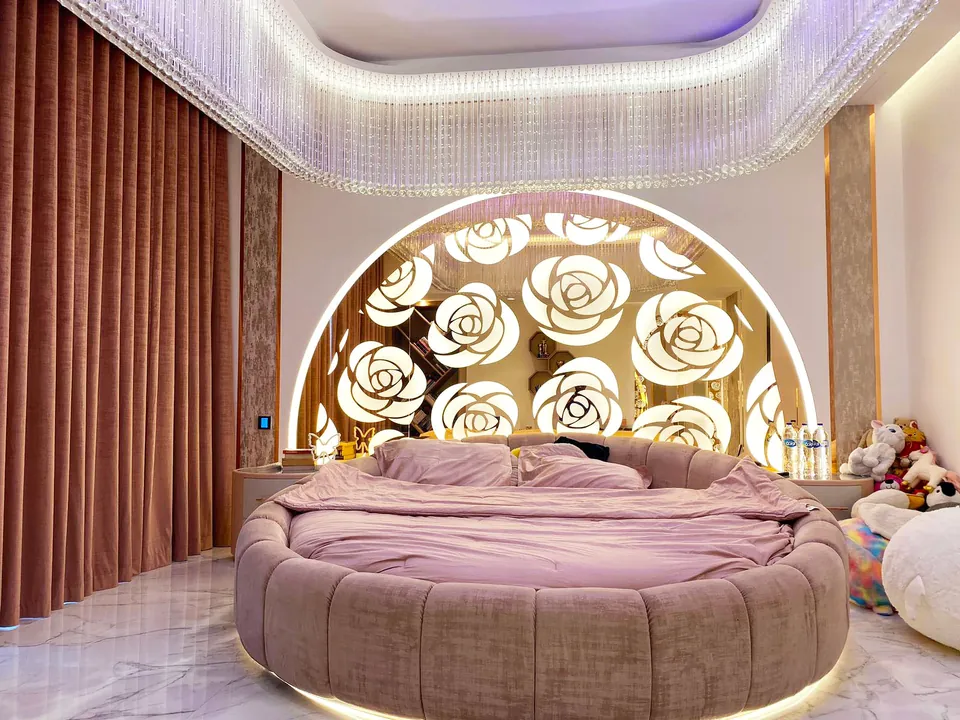
There are exceptions. At MK Villa on Palm Jumeirah, the girl's bedroom pictured at the top of this page has a round bed and a floral carved headboard, and the villa also included a bedroom designed with bright pink rose lighting. A room built around a strong idea can be exactly right when the family wants it, as long as everyone sees it as a statement rather than a neutral backdrop. For an older child, the calm approach of the bedrooms at Emirates Hills Villa, with simple layouts and soft tones, often lasts longer.
Light, sleep and the Dubai climate
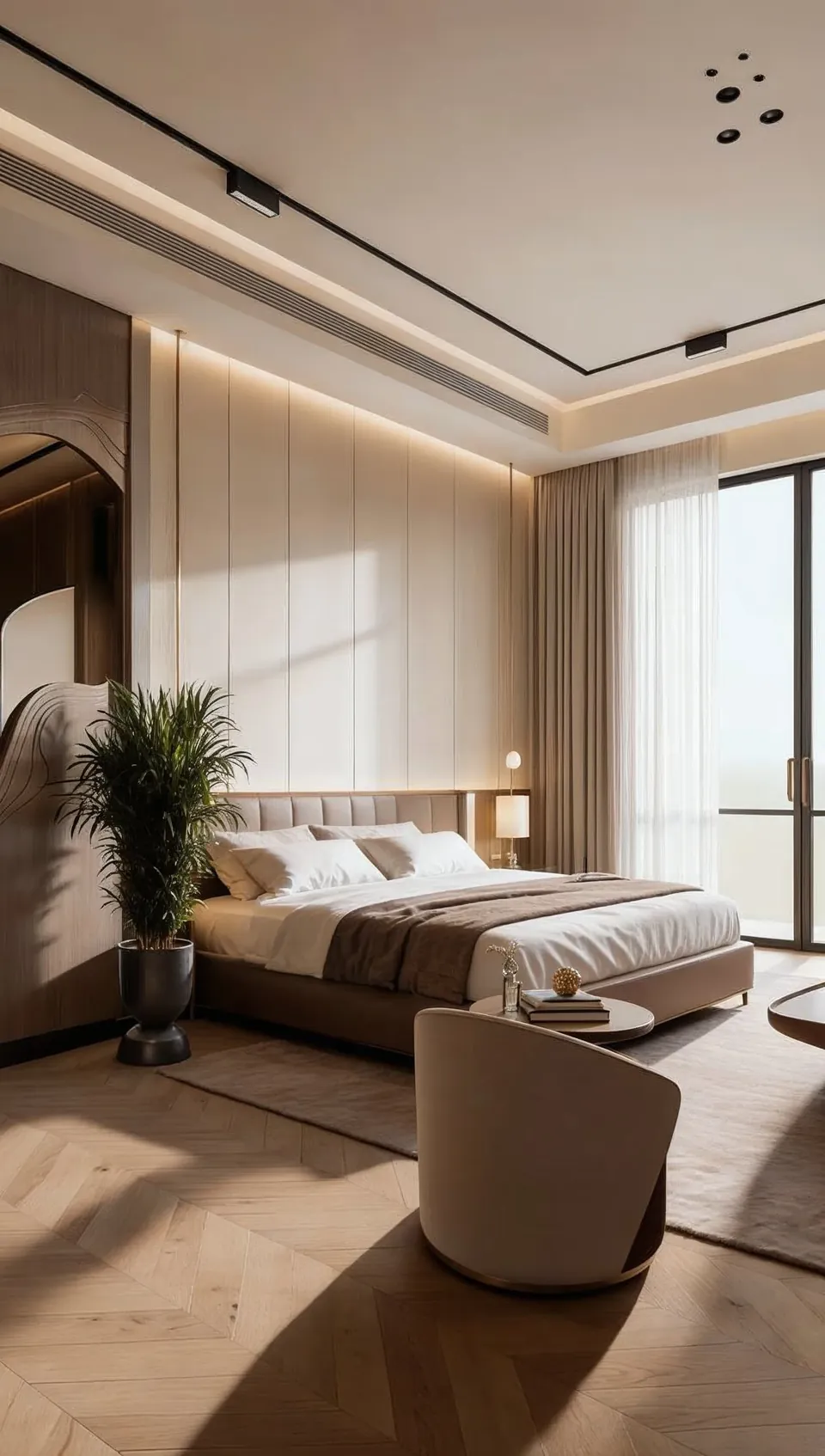
Summer sunrise in Dubai is early, and for part of the year children go to bed while it is still light outside, so blackout blinds or lined curtains are almost always worth having. Dimmable, layered lighting lets the room move from bright play to a quiet bedtime, and a low night light helps younger children find the bathroom.
Air conditioning needs care in a child's room. A supply grille blowing straight onto a cot or bed can leave a child cold at night, so we position outlets away from the sleeping area and plan controls that parents can set without small hands changing them. Quiet equipment matters too, because a fan cycling loudly through the night disturbs light sleepers.
Seeing the room before it is built
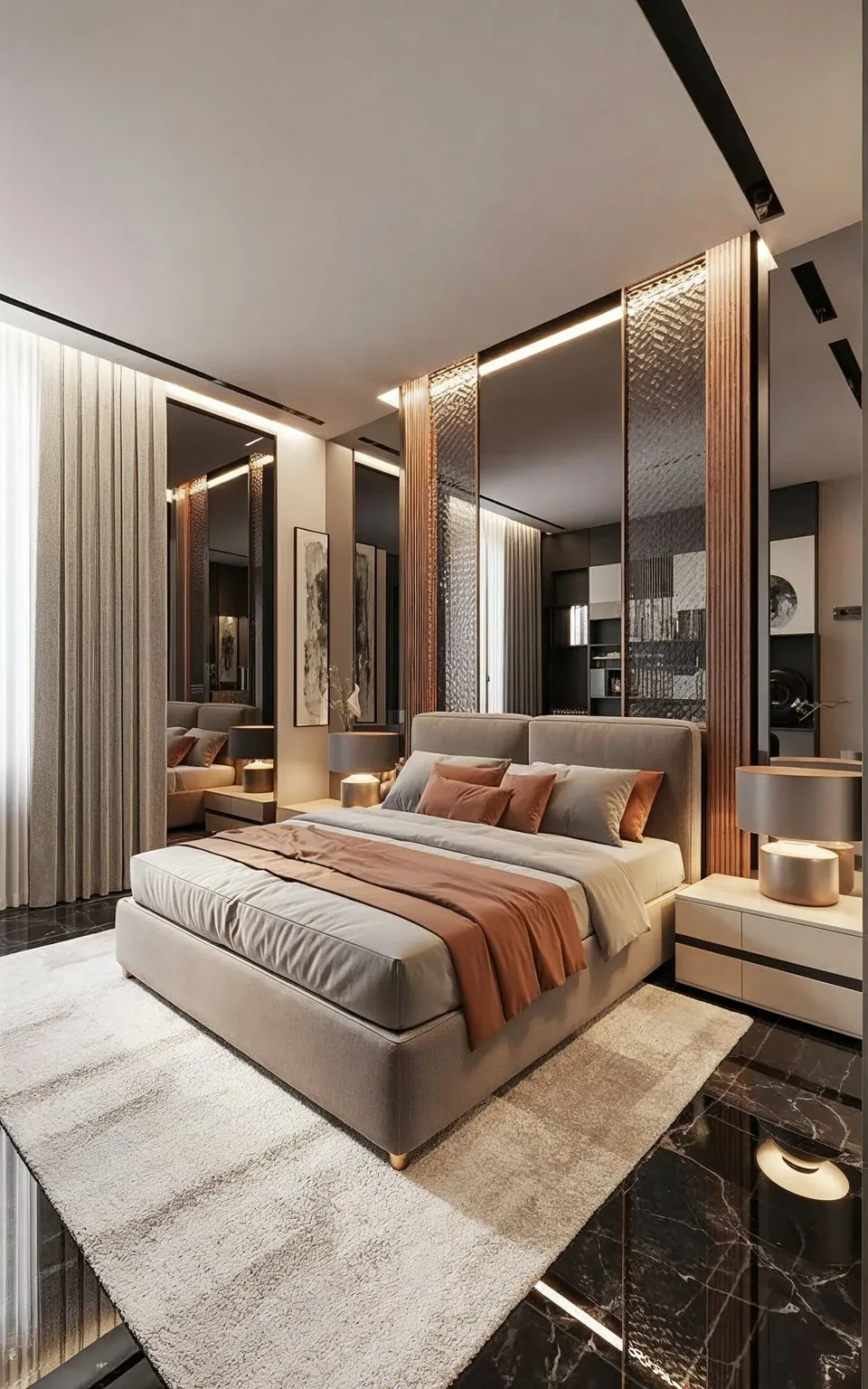
Children's rooms benefit from being seen early. Drawings fix bed positions, sockets and lighting, and 3D visualisation lets parents, and children, see colours and furniture together before anything is made. Our 3D visualisation for Jumeirah Villa 23 included bedroom renders such as the one below, prepared during the design stage.
What shapes the cost of a child's room
The main drivers are how much joinery is built in, whether electrics and air conditioning outlets move, the lighting and blind controls, the flooring and the furniture chosen. Built-in bunks, raised beds and full height wall storage are usually the largest items. Children's rooms are normally designed within a wider project; send us your plans through our estimate page to see how they fit.
Our Work
Related Projects
FAQ
Kids' Bedroom Design: Questions Answered
Clarity brings comfort. Discover answers to what others have asked, or reach out if yours is still unanswered.
How can a child's room last into the teenage years?
Keep built-in elements neutral and adjustable, such as wardrobes with movable rails and shelves, and put themes into paint, bedding and accessories. Plan sockets and lighting for a desk from the start, even if the desk comes later.
Should wardrobes and bookcases be fixed to the wall?
Yes. Tall or heavy furniture in a child's room should be anchored so it cannot tip if a child climbs or pulls on it. Our built-in joinery is fixed to the structure, and we plan fixings for freestanding pieces too.
Where should the bed go?
Away from windows and from the air conditioning outlet, with a reading light and a switch within reach. In a shared room, give each bed its own zone.
Are bunk beds a good idea?
They free a lot of floor in a shared room. Choose a design with guard rails on the top bunk and a secure ladder, keep it clear of windows and ceiling fittings, and check the top bunk suits the child's age.
What flooring works best in a child's room?
Something warm underfoot, quiet and easy to clean, such as engineered timber or a good laminate with a washable rug, or carpet in an older child's room if the family prefers it. Polished stone can feel cold and slippery for small children.
Can our children be involved in the design?
We encourage it once they are old enough. Choosing colours, bedding or a feature wall gives them ownership of the room, while you and our team look after layout, safety and storage.
Designing a room for your children?
Share your floor plan and your children's ages with us on WhatsApp or by calling +971 58 585 6265. We answer within one working day with an estimate and timeline.